When planning animal feed, the first question that comes to mind is: what ingredients can fit naturally into a well-planned ration? Modern animal nutrition is no longer focused only on putting together conventional feed ingredients. Feed manufacturers, farms, and livestock operations are also paying closer attention to how ingredients are produced, processed, and incorporated into different formulations.
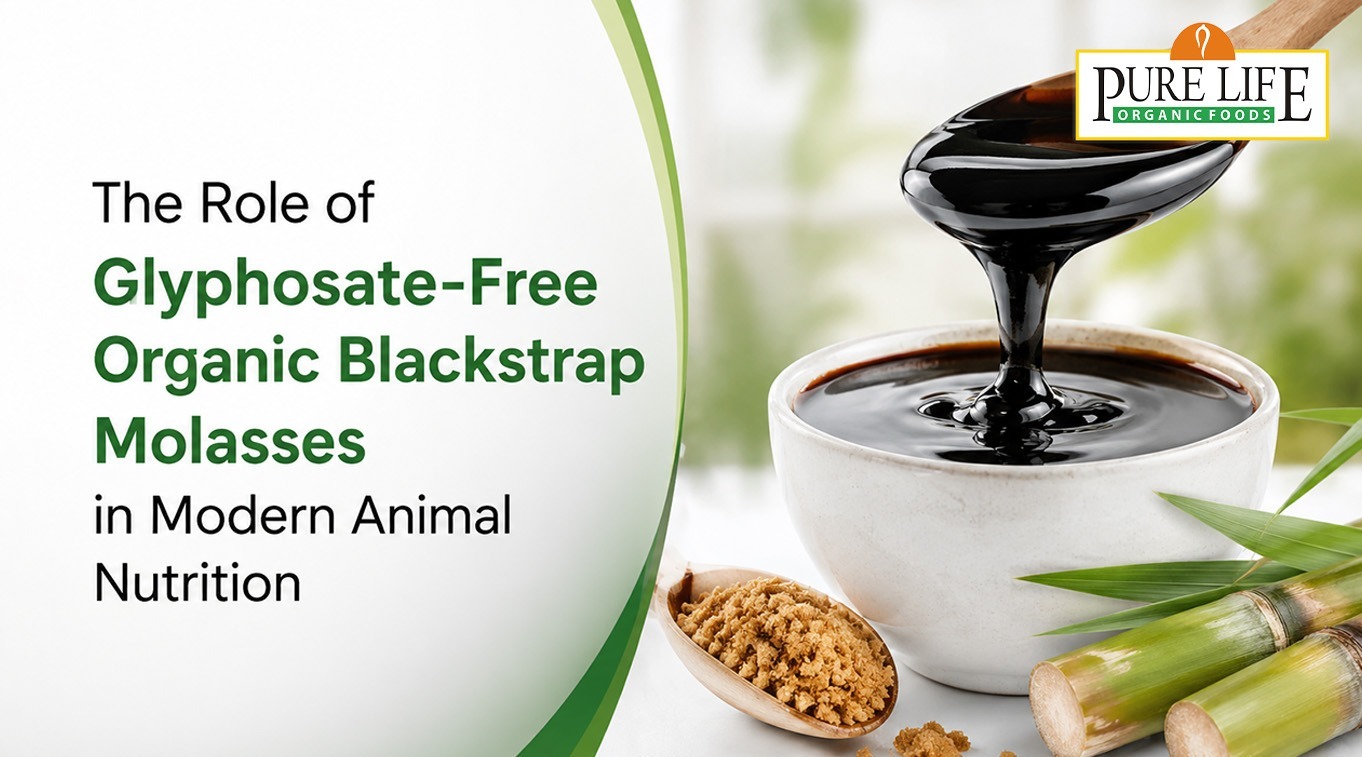
Organic blackstrap molasses that is glyphosate-free has been given much attention here. It is a versatile component of different feed uses because of its natural sweetness, energy value, and naturally occurring components. Simultaneously, organic production and glyphosate-free status can also be in line with the ingredient requirements of some buyers and markets.
So, where does Blackstrap Molasses Organic fit into modern animal nutrition? Let us understand its role in greater detail.
What Is Organic Blackstrap Molasses?
If you have heard about blackstrap molasses but are not familiar with its production, then you must be wondering what exactly it is. Blackstrap molasses is a dark, concentrated liquid obtained during sugarcane processing.
Organic blackstrap molasses is produced from organically grown sugarcane under applicable organic production requirements.
Why Does Glyphosate-Free Matter in Modern Feed Production?
Ingredient transparency has gradually become an important consideration across many food and agricultural supply chains. Hence, some buyers now look beyond the basic composition of an ingredient and also consider how the agricultural raw material has been cultivated.
Glyphosate-free organic molasses may be relevant where a feed formulation, procurement policy, or end market has particular requirements concerning agricultural inputs.
This is why documentation and clearly defined production standards can play an important role when choosing feed ingredients.
How Does Blackstrap Molasses Fit Into Animal Feed?
One of the interesting characteristics of molasses is its versatility. Blackstrap Molasses Organic can be incorporated into animal feed formulations depending on the required composition and feeding system.
The naturally occurring sugars in it give it an energy value, and the liquid nature of the substance can make it blend with other feed materials. It is also made of naturally occurring trace minerals and sugarcane-related components.
Improving The Physical Characteristics Of Feed
Have you ever noticed how dry feed ingredients can sometimes separate during handling? This is another area where molasses can have a practical role.
Because of its thick liquid consistency, molasses may help bind certain dry components when incorporated appropriately into feed. This can make it useful in compound feeds and other formulations where maintaining a more consistent mixture is desirable.
A Source Of Readily Available Carbohydrates
Energy remains one of the fundamental considerations while formulating livestock rations. Blackstrap molasses naturally contains sugars and carbohydrates derived from sugarcane, which is why it is commonly considered an energy-containing feed ingredient.
With cattle and other livestock, the amount added should be matched with other ration components. The final product of feed formulation is to make sure that the required balance of ingredients is achieved and not to depend on one ingredient.
Therefore, the role of molasses can differ considerably between dairy, beef, and other animal feed formulations.
Naturally Occurring Minerals In Blackstrap Molasses
Another reason blackstrap molasses is considered for feed formulations is its naturally occurring mineral profile. Depending on the raw material and processing conditions, molasses may contain minerals such as magnesium, potassium, calcium, and iron in varying quantities.
The real composition may, however, vary between batches or manufacturers. Therefore, consumers might consider it helpful to review specifications and other pertinent product documentation before determining how Blackstrap Molasses Organic should be included in a specific feed formulation.
This measured approach allows formulators to evaluate the ingredient alongside the remaining components of the ration.
Why Does Processing Matter?
Not every blackstrap molasses product is necessarily processed in the same manner. Processing temperature, concentration, moisture, and handling practices can influence the characteristics of the finished material.
That is why manufacturers of feed and bulk purchasers are able to consider such specifications as Brix and moisture when evaluating molasses. As an example, a minimum Brix specification can be used to give valuable information regarding soluble solids and product concentration.
Similarly, appropriate storage and packaging become important because molasses is a bulk liquid ingredient. Tanker trucks, flexi bags, barrels, and IBC tanks are among the packaging formats that may be considered depending on the quantity and operational requirements.
Where Can Organic Blackstrap Molasses Be Used?
Depending on formulation requirements and applicable feed standards, organic blackstrap molasses may be considered across several areas, including:
- Dairy cattle rations
- Beef cattle rations
- Compound feed formulations
- Feed pellets and blended feeds
- Farm-level livestock feed mixtures
The exact application and inclusion rate should be determined according to the complete feed formulation and the requirements of the intended animal category.
Organic Molasses And Changing Buyer Expectations
Modern agricultural markets have gradually become more attentive to traceability, certification, and production methods. As a result, organic ingredients may be considered by businesses developing products for markets where certified organic production forms part of the procurement criteria.
Glyphosate-free considerations add another layer to this selection process. Rather than viewing these characteristics as direct indicators of animal performance, they are better understood as production and procurement considerations.
This distinction is important. It keeps the focus on what the ingredient is, how it is produced, and where it may fit within a professionally formulated feeding programme.
Selecting A Manufacturer For Organic Blackstrap Molasses
When buying molasses in bulk, consistency and manufacturing capacities might be a consideration. Prior to purchasing, customers may want to look at product specifications, certifications, manufacturing, grades offered, packaging, and bulk supply.
Pure Life manufactures organic blackstrap cane molasses to be used in food and feed, and feed-grade cane molasses to be used in animal feed. With its manufacturing facilities focused on organic products and bulk packaging solutions to diverse commercial requirements, Pure Life can be contacted by companies that need organic blackstrap molasses to incorporate into their recipes.
Frequently Asked Questions
- What is organic blackstrap molasses that is glyphosate-free?
It usually means blackstrap molasses produced using organically produced sugarcane as well as satisfying the relevant glyphosate-free requirements or specifications set on the product or supply programme.
- Is it possible to add organic blackstrap molasses to cattle feed?
Blackstrap molasses can be used in cattle feed in a well-balanced ration, but it must be organic. Depending on the kind of animal, other feed ingredients, and the overall formulation requirements, the correct quantity can vary.
- What do buyers need to know when buying organic blackstrap molasses?
Before purchasing a product, commercial buyers might take into account manufacturing standards, organic certification, product specifications, Brix, moisture content, packaging choices, intended feed application, and other documentation.