When preparing feed for dairy cows or cattle, the first question which comes to mind is how different ingredients can work together in the ration. After all, cattle feed is rarely about adding one ingredient and expecting it to do everything. Each component generally has a particular role, whether it is providing energy, adding minerals, improving feed consistency, or making the overall ration more acceptable to livestock.
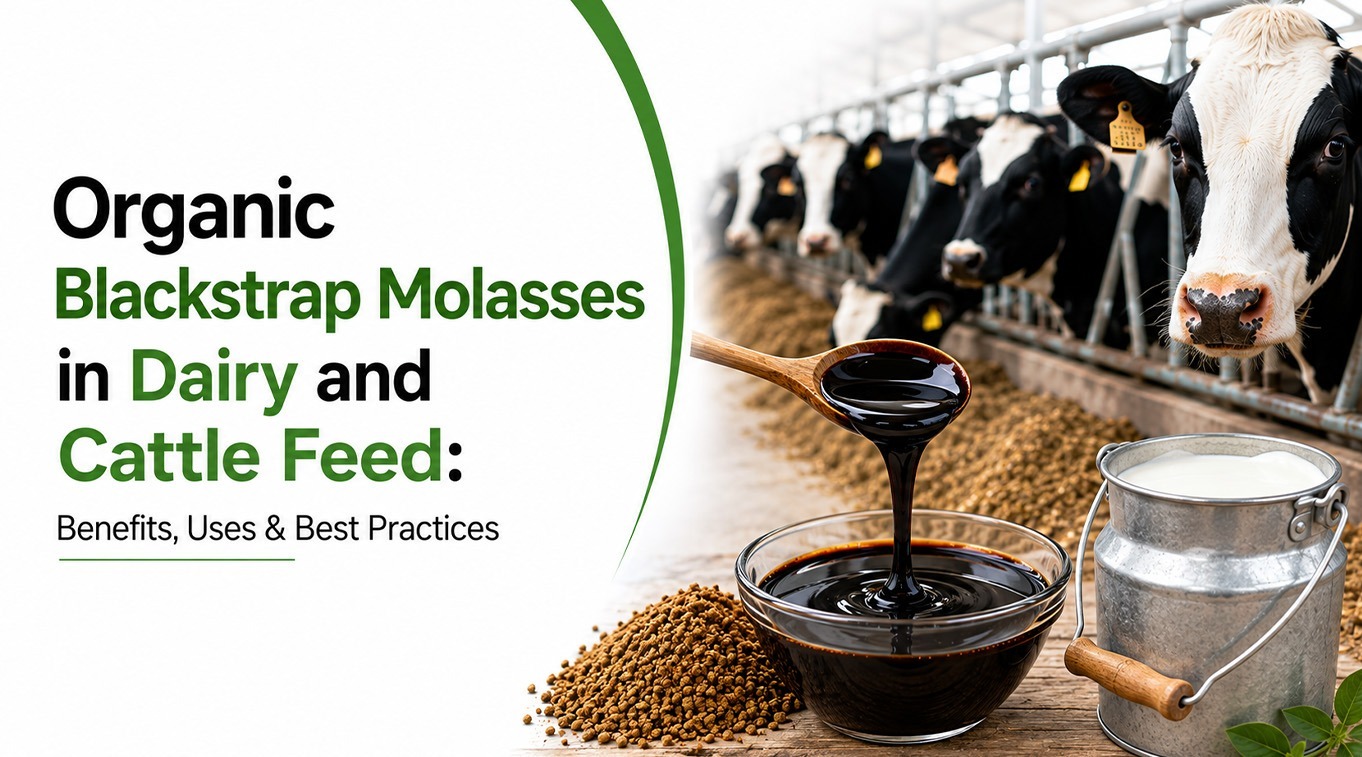
This is where Blackstrap Molasses Organic can be considered as one of the ingredients in dairy and cattle feeding programs. Produced from organic sugarcane, blackstrap molasses is a thick, dark liquid with naturally occurring sugars and minerals. Its characteristics allow it to be incorporated into different types of cattle feed while also influencing the taste and physical properties of the ration.
So, how is it commonly used, and what should farmers and feed businesses consider before adding it to cattle rations? Keep on reading to understand.
What Is Organic Blackstrap Molasses?
If you have seen the dark, thick liquid associated with sugarcane processing, then you probably already have an idea of what molasses looks like. Blackstrap molasses is obtained during sugarcane processing and is known for its characteristic dark colour, strong flavour, and dense consistency.
In livestock applications, Blackstrap Molasses Organic can be incorporated into formulated feed or ration programs according to the requirements of the operation.
Why Is Blackstrap Molasses Used in Cattle Feed?
You must be wondering why a sticky liquid is added to cattle feed in the first place. One reason is its naturally occurring sugar content. These sugars provide a readily available source of dietary energy within a properly formulated ration.
On the other hand, its distinctive sweetness may also make certain feed mixtures more palatable. This can be particularly useful when a ration contains ingredients with tastes or odours that cattle may otherwise find less appealing.
Where Does It Fit Into Beef Cattle Rations?
The same ingredient can also have applications in beef cattle feeding. Blackstrap Molasses Organic may be blended with other ration components to introduce sugars, minerals, moisture, and a characteristic sweet flavour.
However, molasses should generally be viewed as one part of a complete feeding program rather than a replacement for other important feed components. The total ration still needs to account for factors such as forage, protein sources, minerals, energy requirements, and the particular stage of the cattle.
This is why feed formulation should be approached according to the requirements of the herd rather than relying on a single ingredient.
Why Does Feed Palatability Matter?
You may have prepared a nutritionally planned ration, but what happens when cattle are reluctant to consume certain components? This is where palatability becomes an important consideration.
Molasses has a naturally sweet and recognisable flavour. When incorporated into suitable feed formulations, it may help make the ration more appealing and mask some less desirable tastes associated with other ingredients.
However, more molasses does not necessarily mean a better feed. The objective is generally to maintain an appropriate balance within the overall formulation.
Best Practices When Using Organic Blackstrap Molasses
Like most feed ingredients, blackstrap molasses needs proper handling and storage. As it has a thick consistency, using it in larger quantities may require suitable tanks and pumps, along with proper dispensing arrangements.
It should generally be kept in appropriate storage conditions and protected from contamination. Feed manufacturers and livestock operations should also review product specifications before use.
For example, parameters such as Brix and moisture can provide useful information about product consistency. Pure Life’s organic blackstrap cane molasses specifications include a minimum Brix of 80° and maximum moisture of 20%.
Choosing Molasses for Feed Applications
Not every molasses product is necessarily prepared for the same application. Hence, buyers should first establish whether they require food-grade or feed-grade material.
For cattle applications, factors such as organic certification, product specifications, manufacturing practices, packaging formats, and suitability for feed formulation can all be considered.
Bulk packaging may also become important for commercial feed manufacturers or larger cattle operations, where handling efficiency and storage requirements can influence purchasing decisions.
Final Thoughts
Organic blackstrap molasses can be a versatile ingredient in dairy and cattle feeds. The naturally occurring sugars, minerals, sweetness and binding properties of it allow it to perform several useful functions when incorporated into a carefully considered ration.
Pure Life manufactures organic blackstrap cane molasses to be utilised in food and feed, and feed-grade types to suit different livestock feed formulations. With bulk tanker, flexi bag,and IBC packaging options available, businesses can explore formats according to their operational requirements. In case you are considering using organic blackstrap molasses in making dairy or cattle feed, you can consider using the product range of Pure Life.
Frequently Asked Questions
- What is organic blackstrap molasses used for in cattle feed?
Cattle feed can be supplemented with organic blackstrap molasses, which is a source of naturally occurring sugars and minerals. Its sweetness and liquid nature can also contribute to its palatability, binding and the overall physical properties of certain feed formulations. - Is it possible to use organic blackstrap molasses in the dairy cattle ration?Yes, it may be added to dairy cattle rations when it is necessary for the formulation. The entire ration, cattle needs, and feeding system can be used to determine the correct amount. An appropriate inclusion level can be determined with the assistance of a qualified livestock nutrition or feed professional.
- What is the storage of blackstrap molasses to be used as cattle feed?
It should be stored in proper containers or bulk storage facilities under conditions that are likely to maintain it against contamination and maintain product quality. Proper tanks and dispensing equipment can also be used to make handling easier in case of commercial quantities.