When people think about sugar, they usually think about sweetness and nothing beyond that. It feels like a basic ingredient that simply does its job and disappears into food. But if you pause for a moment and actually look at different types of sugar, you will realise something feels slightly off. Not all sugar behaves the same, and more importantly, not all of it comes from the same process.
This is where Organic Turbinado Sugar quietly starts to make a difference. It does not try too hard to stand out, yet the moment you notice it, you begin to question what you have been using all along.
If you have ever picked up a pack of golden coloured sugar crystals and wondered why they look slightly raw or unfinished, then you were probably looking at this very type. At first glance, it may even feel less refined, and in a way, that is exactly the point.
What Makes Organic Turbinado Sugar Different
To understand it properly, it helps to go back to the beginning. Sugar starts its journey as sugarcane juice, which is naturally rich and slightly complex in flavour. Most conventional sugar goes through several layers of processing where everything except sweetness is removed.
With Organic Turbinado Sugar, that process is intentionally limited. The juice is heated and crystallised, but not taken through excessive refining. Because of this, a small portion of molasses stays behind, which gives it that light golden tone and a faint depth in taste.
It is not dramatic or overpowering. In fact, the difference is subtle enough that you may only notice it after a few uses.
Why People Slowly Shift Towards It
Interestingly, most people do not switch to this sugar overnight. It usually starts with curiosity. Someone notices the texture, tries it once, and then realises it feels slightly different in a way that is hard to explain immediately.
This disparity is more pronounced over time. The sweetness is not so sharp, and the experience is a bit more balanced. It is not the instantaneous calling one type better than the other, but rather more about what seems to be closer to the way food is supposed to taste.
There is also a growing awareness around how ingredients are sourced. People are not just looking at labels anymore. They are thinking about origin, process, and long-term impact, even in small decisions like choosing sugar.
Benefits That People Often Notice
When switching to something new, expectations are usually high. While this is still sugar and should be used carefully, it does offer certain qualities that stand out once you begin using it regularly.
- It is subjected to minimal processing, and it is what preserves some of its natural nature.
- It has a slight molasses flavor that gives a slight richness to daily dishes.
- The size of the crystal is bigger, and this provides a different texture to some foods.
- It is grown in organic farming without any artificial interference.
- The sweetness is more gradual than sharp or instant.
- It mixes well with hot beverages and baked foods.
- It can be easily incorporated into a more conscious attitude towards food choices.
Where It Actually Works Best
You do not need to rethink your entire kitchen to start using it. In most cases, you can replace your regular sugar without making any adjustments. That said, the experience does change slightly depending on how you use it.
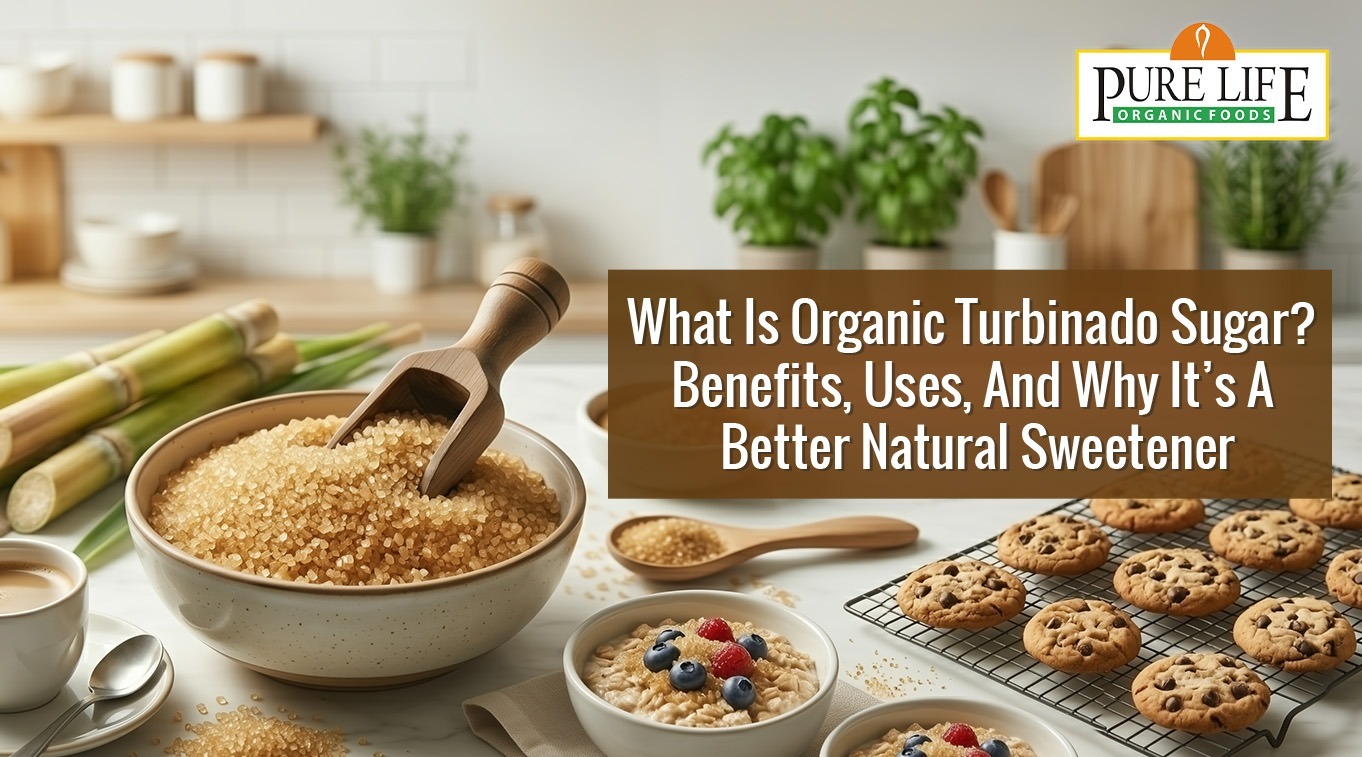
In tea or coffee, it dissolves easily and adds a very mild warmth to the taste. It is not something you will immediately identify, but it feels different enough to notice after a few cups. In baking, especially in cookies, it creates a slightly crisp top layer that many people enjoy.
Some even use it as a finishing touch on fruits or cereals. That small crunch adds a different dimension, which plain sugar does not usually offer.
Is It Actually A Better Natural Sweetener
There is no one definite answer to this question. It is all a matter of what you are seeking. In case the objective is to avoid sugar altogether, then this is not the answer. However, when the aim is to shift towards something that is less processed, then it begins to make sense.
The key difference lies in how much of the original form is preserved. Since it avoids heavy refining, it stays closer to its natural state. For many people, that alone is reason enough to make the switch.
It is not a dramatic lifestyle change. It is more like a quiet adjustment that slowly becomes a habit.
A Few Things You Might Want To Keep In Mind
Initially, the texture may be a bit strange, particularly when you are accustomed to extremely fine sugar. It is not immediately dissolved in cold liquids, which may seem a bit inconvenient at first. This is, however, easier to handle when you know where it works best.
The difference in flavour may also require a couple of uses to become accustomed to. There are those who can see it at first glance, and those who can only see it when they revert to normal sugar.
In any case, the transition is not typically difficult and does not demand a lot of effort.
Conclusion
The tiniest alterations in your kitchen can sometimes result in the most significant changes over time. The decision to use Organic Turbinado Sugar is not a statement to make. It is a matter of taking a little more care about what you put in your food and how it gets to your plate.
Organic Foods such as Pure Life Organic Foods have a full farm-to-fork strategy, which means that all the steps between farming and delivery are organic. Their emphasis on sustainability, research, and ethical farming practices contribute to a more transparent and reliable food system.
FAQs
What is Organic Turbinado Sugar?
It is a semi-refined sugar produced out of sugarcane juice, in which a little bit of molasses is left behind, which gives it a golden colour and a mild taste.
Does it have a very different taste compared to regular sugar?
The distinction is slight. It is a bit less sharp and has a slight depth, which is more pronounced with use.
Is it usable as ordinary sugar?
Yes, it can be consumed just like ordinary sugar, but one should still exercise moderation, as it is a type of sugar.
Why is it rougher than white sugar?
The crystals are not refined and not further broken, that is why they look bigger and a bit irregular.