Something is interesting about how people choose food today. It is no longer only about taste or price. Sometimes, it comes down to a simple question. Can you trust what you are consuming every day?
Sugar is one of those things people rarely question. It sits quietly in tea, desserts, and packaged food without drawing much attention. But when you look closely, the way it is produced tells a very different story.
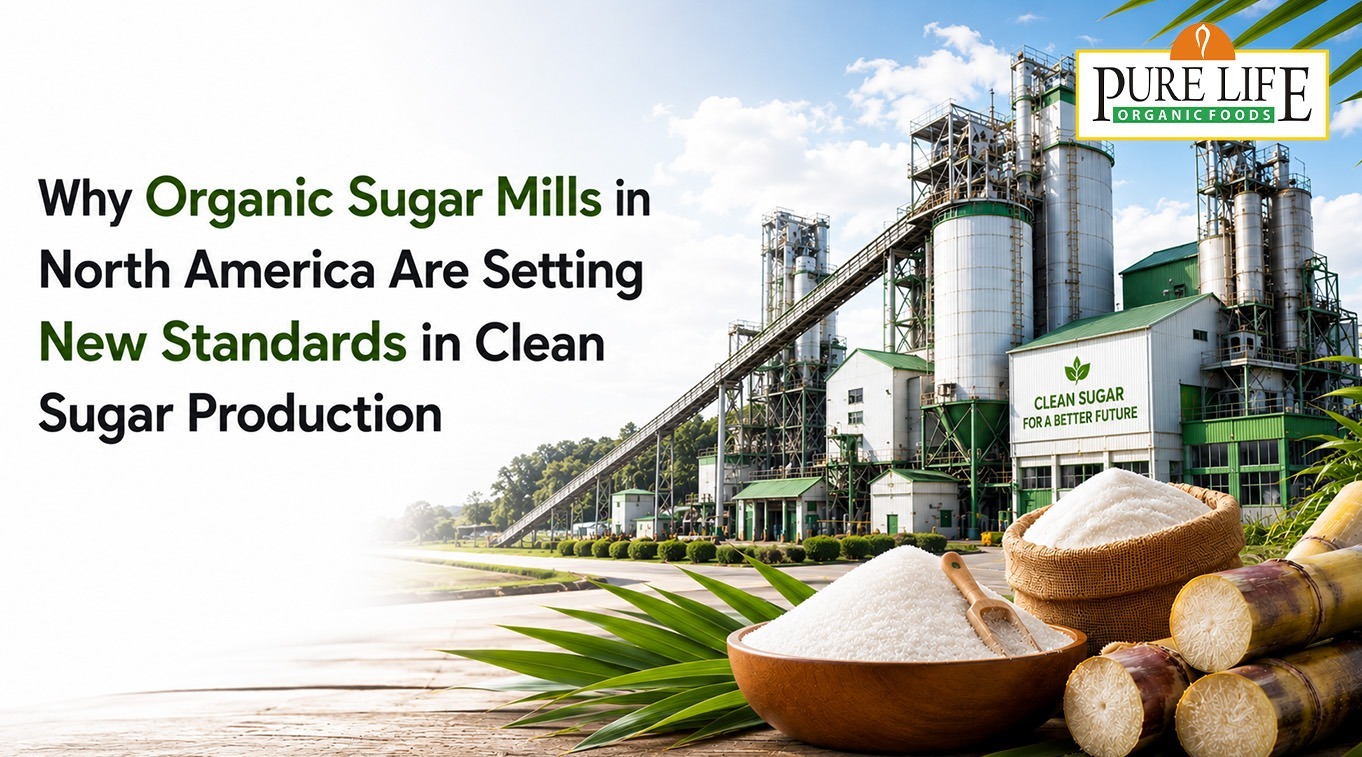
Across North America, this story has started to change. Not loudly, not overnight, but steadily. And right at the centre of this shift, you will find what many now call a modern Organic sugar mill.
Where The Change Actually Begins
Most people think the difference lies in processing. That is only half the truth. The real difference begins much earlier, long before sugar even reaches a mill.
It starts in the soil.
Farmers working with organic systems are not chasing quick results. They are working with cycles, seasons, and natural balance. This changes how sugarcane grows, and more importantly, how it behaves during processing.
That is why a well-run Organic Sugar Mill does not need to “fix” the raw material aggressively. The input itself is already cleaner.
Why Clean Production Is Not Just A Label
The term clean production sounds simple, but it carries more weight than it appears. It is not only about removing unwanted elements. It is also about deciding what should never be added in the first place.
This is where many conventional systems fall short.
Organic mills focus on preserving what is already there instead of rebuilding it later. The fewer corrections needed during processing, the closer the final product stays to its natural state.
You may not notice this difference immediately, but over time, it becomes quite clear.
The Quiet Role Of Small Decisions
One thing that often gets overlooked is how small operational choices shape the outcome. It could be how the cane is transported. It could be how quickly it is processed after harvest.
These are not dramatic changes, but they matter.
In many North American setups, there is a visible effort to reduce delays and unnecessary handling. This keeps the raw material stable and reduces the need for heavy intervention later.
It is a subtle shift, but it changes the entire workflow.
Technology That Knows Its Limits
Technology is still very much part of the process. That has not changed. What has changed is how it is being used.
Instead of pushing systems to extract maximum output, mills are focusing on controlled processing. The idea is not to force efficiency, but to support it without damaging quality.
This approach requires restraint. And that is not always easy in large-scale production environments.
What Traceability Really Solves
You may have noticed that more brands talk about traceability now. It is not just a marketing line.
When every stage of production is tracked, it creates accountability. Farmers, processors, and distributors all become part of a visible chain. There is less room for shortcuts.
For consumers, this brings a certain level of confidence. You are not just buying sugar. You are buying a process that you can follow if you want to.
How Sustainability Shows Up In Real Terms
Sustainability often feels like a broad concept, but in sugar production, it becomes very practical.
It shows up in how water is used. It shows up in how waste is handled. It even shows up in how farms are maintained year after year without exhausting the land.
These efforts may not change the look of the product, but they change its story.
What Modern Organic Mills Focus On Today
- Careful handling of sugarcane right after harvest to maintain natural quality.
- Less reliance on synthetic inputs during farming and processing processes.
- Systems that enable complete field-to-final packaging tracking.
- Practices that involve resource management that minimize the environmental strain in the long term.
Consistency Without Over-Control
Consistency is one of the challenges that remain. Nature is not predictable, and organic systems are at home with that.
Contemporary mills are managed in a flexible way as opposed to imposing uniformity. They work out adaptive mechanisms rather than replacement.
This makes the product seem more real, although it might take more effort behind the scenes.
Looking into the Future, Not Rushing.
The move towards cleaner production is not a fad that will fade away soon. It has been developing gradually since it was founded on need, rather than hype.
Production systems will continue to evolve with more people starting to question sourcing and quality, not in a radical way, but in a gradual way.
And it is that gradual change that tends to endure.
Conclusion
It is not about one process or one decision to make clean sugar in the larger context. The manner in which everything is connected between the field and the final product is worrying. Pure Life Organic Foods is a reflection of this strategy as it takes care and purpose in every step, so that quality is not added at the end but rather created at the very first step.
FAQs
What is the reason why organic sugar mills are becoming popular?
The awareness of food sourcing and production processes has been growing, and this has resulted in a growing interest in systems that focus on natural processes and transparency.
Does organic sugar require any further processing?
Yes, organic sugar does not necessarily need much processing, which contributes to preserving its natural structure and reduces the application of chemical procedures.
What is the effect of farming on sugar quality?
The way sugarcane is grown directly affects its structure and purity, which in turn affects the ease with which it can be processed without the need to be heavily refined.
Does clean sugar production cost more to sustain?
It might require extra work and organization, yet it is more likely to be sustainable in the long run and create a stable product quality.